Event Insight
Building Bridges 2026 Recap: Key Takeaways from Geneva and Highlights from our Session on Nature-based Infrastructure
October 23, 2026
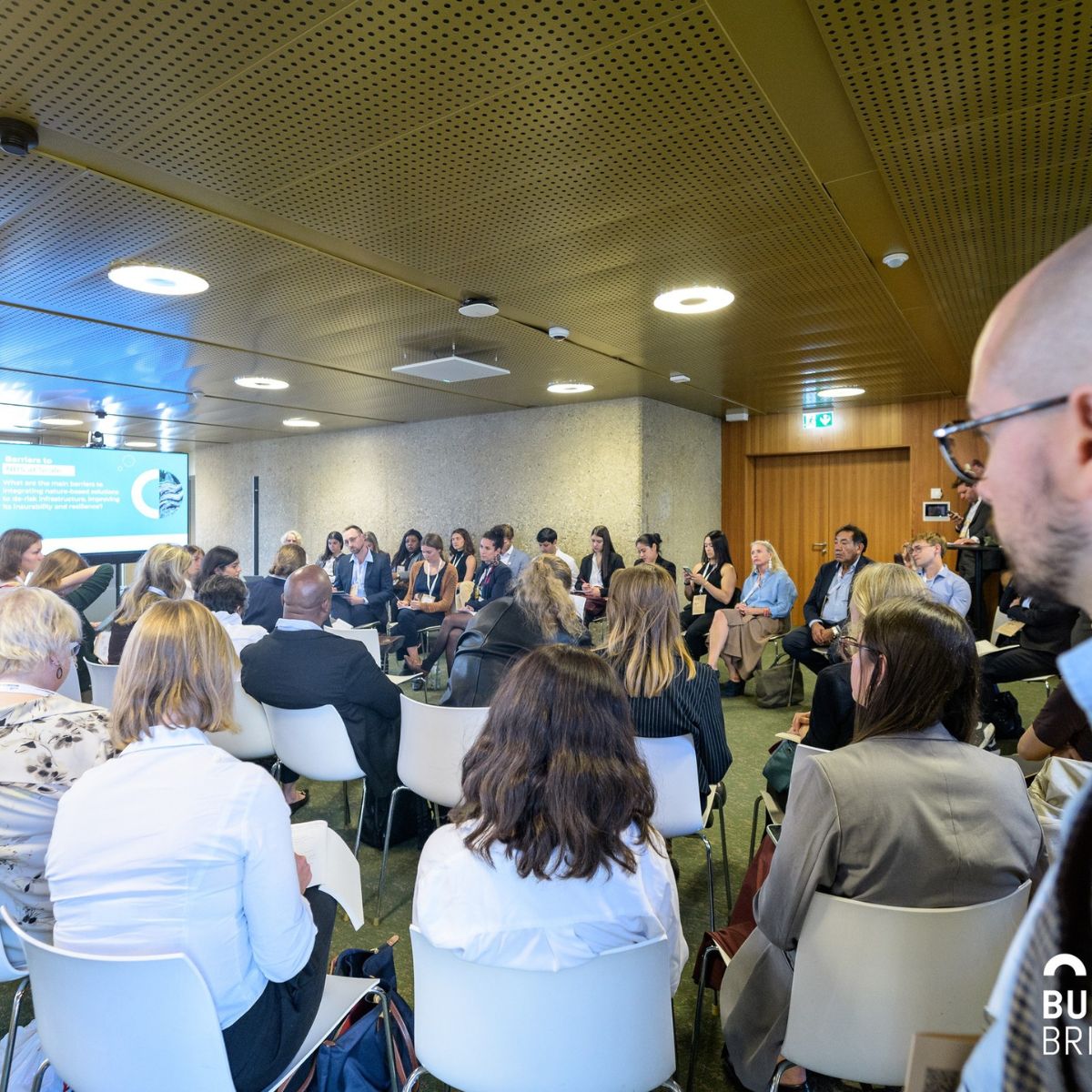
This year Building Bridges in Geneva returned for its seventh edition, aligning finance with sustainability and with Global Infrastructure Basel Foundation as an official Networking Partner. The annual event provides a trusted and neutral space where different perspectives can meet a common purpose. The outcomes of the 3-day event summarise a couple of important points, shared by chairman Patrick Odier:
- The conversation is maturing. With asset owners joining asset managers, policymakers, companies, entrepreneurs, academics, and civil society, discussions moved beyond isolated problems towards systems thinking.
- Progress depends on connecting policy, finance, and expertise. Investment opportunities emerge not from capital alone, but when policy, innovation, and finance pull in the same direction.
- Resilience and adaptation are investment priorities. With geopolitics, technology, and climate increasingly intertwined, investors are looking beyond the low-carbon transition to the resilience of economies, infrastructure, and portfolios.
At Building Bridges 2026, Global Infrastructure Basel Foundation (GIB) co-organised a fishbowl discussion with WWF, NatureFinance, and The Nature Conservancy. Moderated by Ania Porucznik (GIB), the session brought together perspectives from NGOs, conservation, insurance, disaster risk finance, and policy.
Nature already protects our roads, homes, businesses, and coastlines. So why are nature-based solutions not yet systematically recognised by insurers or implemented at scale, and what would it take to change that?
We explored how nature-based solutions (NbS) can improve insurability, and consequently the bankability, of infrastructure assets, and how they can support resilience at scale. The discussion focused on what needs to change and which existing approaches we can already build on.
The fishbowl format invited audience members to join the discussion, build on the ideas presented, or challenge different perspectives.
The speakers brought four lenses to the conversation: projects, insurance, government, and finance.
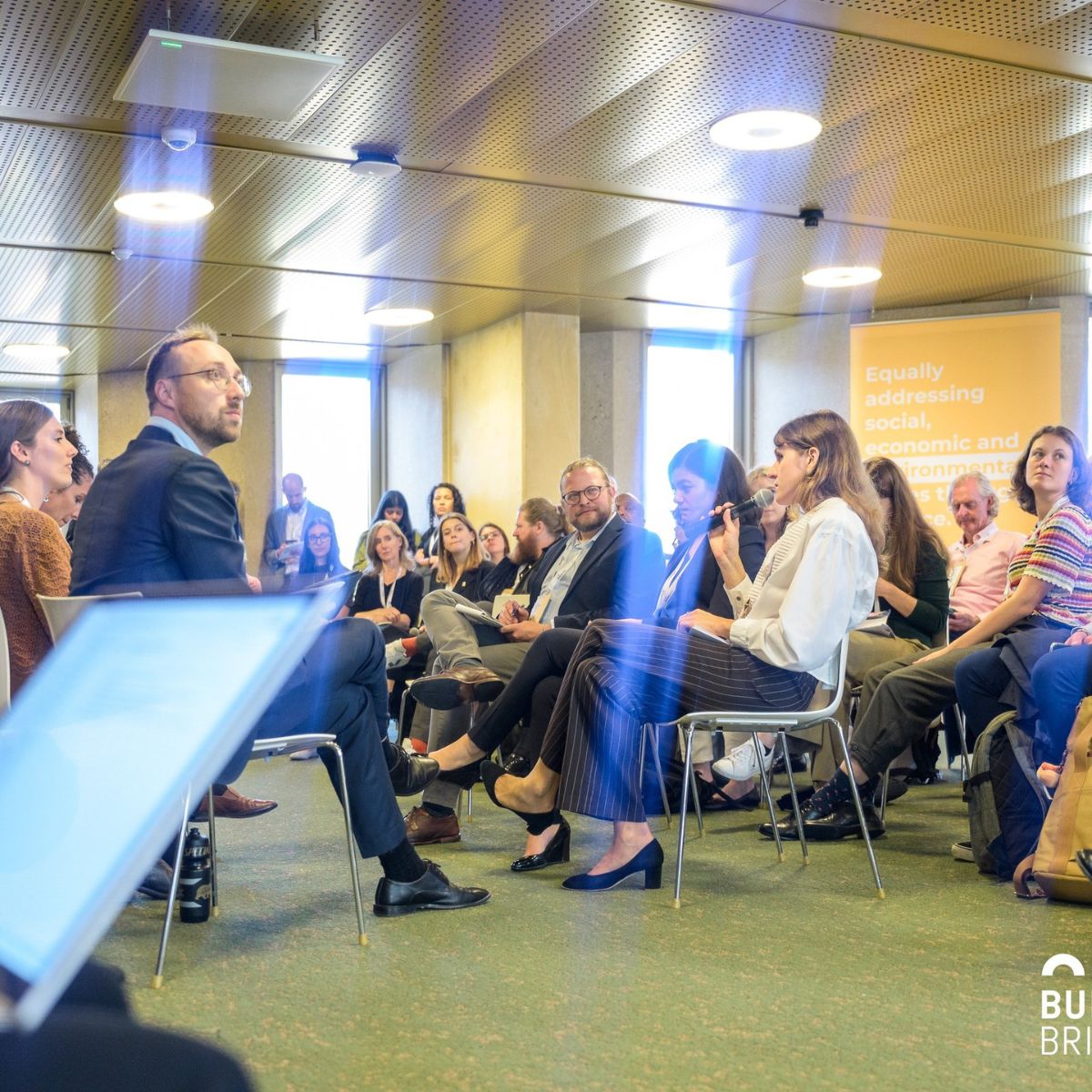
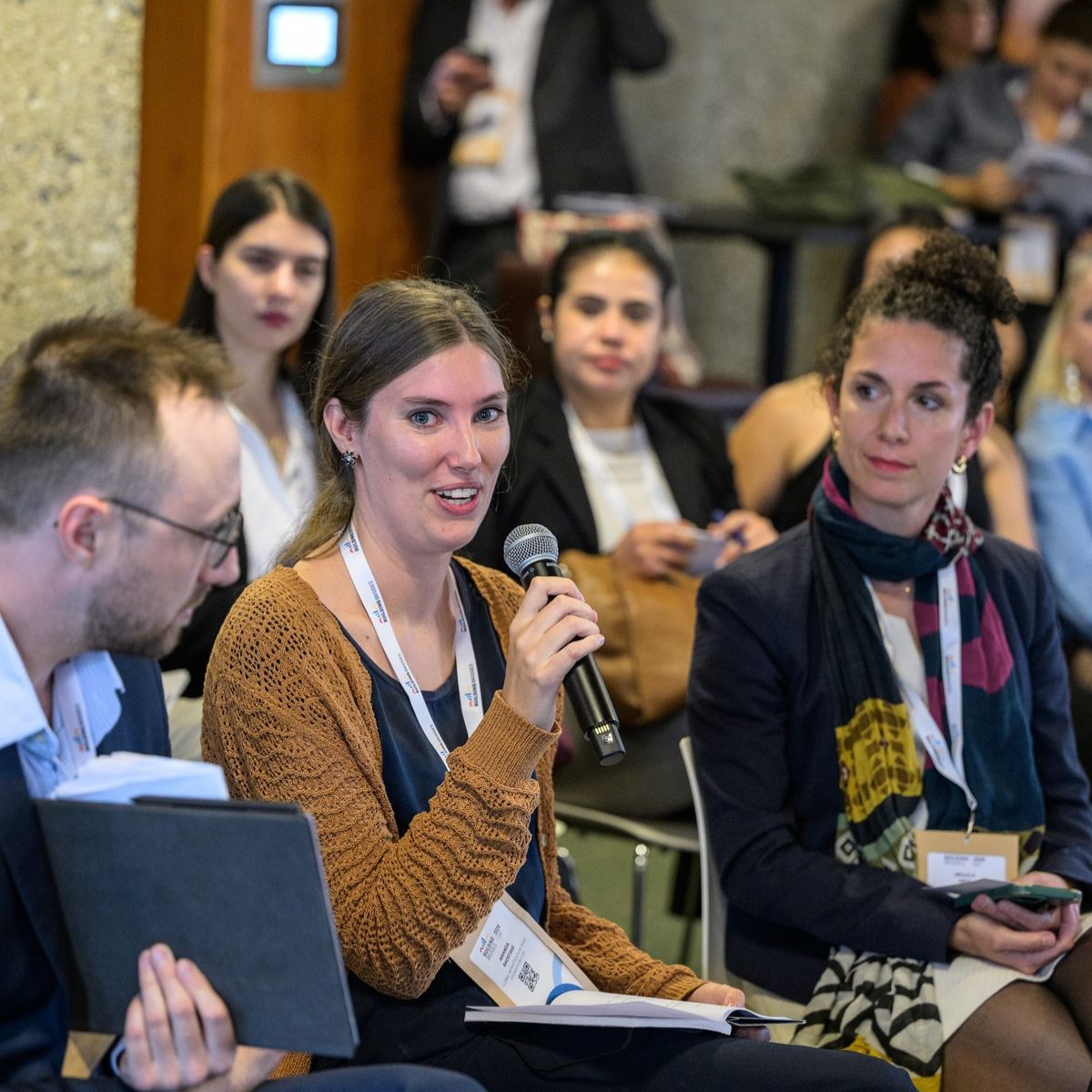
Amanda Radstake (GIB) opened with the project lens and shared experience from the NATALIE project on the barriers of Nature-based Solutions (NbS) to protect infrastructure. Several barriers continue to hold back investment in NbS.
The first is timing: nature takes 5 to 10 years to deliver its benefits, while insurance premiums and policies run on far shorter cycles. Ownership is a second challenge, as land is often held under a mix of public and private ownership, and agreeing on who owns it, and whether it can be used for NbS, remains a major stumbling block that deters financiers and insurers. Data and valuation pose a third obstacle. Nature is not consistently included in local, forward-looking climate models, and there is still too little local evidence of reduced expected losses by nature to make a convincing case for investors and insurers. Finally, project finance remains difficult, as projects require large upfront investment, usually better provided by public sources, while private capital tends to enter only at the operation and maintenance stage.
Other speakers added further perspectives on the barriers to scaling NbS. Eric Roberts (The Nature Conservancy) added the lack of understanding of the thresholds beyond which different ecosystems stop providing effective risk reduction. While these thresholds are relatively well understood for coral reefs, more research is needed for ecosystems such as marshes and coastal dunes. Another challenge is the diversity of markets in which NbS projects operate, making it difficult for insurers to assess and pool risks.
Additional challenges include the affordability of insurance premiums and the difficulty of replicating successful NbS approaches across different locations and contexts.
Large insurers play three roles: underwriters, institutional investors, and, through foundations, philanthropists. Ariane Kaploun (AXA Climate) mentioned different findings where nature has played a role.
A key takeaway was the importance of pooling similar NbS projects into portfolios to make them more attractive and insurable.
Samuel Brown (NatureFinance) introduced resilience-linked subsidies as a potential mechanism for financing insurance premiums. Insurance premium subsidies are already common in agricultural markets, where they help make insurance more affordable, increase demand, and enable insurers to pool risks across a larger number of policyholders.
Resilience-linked premium subsidies build on this approach by linking the level of subsidy to specific key performance indicators (KPIs). Recipients who achieve their targets receive a larger subsidy, while those who do not receive a smaller one. This creates financial incentives to adopt more resilient practices. Since nature-based solutions can contribute to risk reduction, biodiversity and nature-related KPIs could also be incorporated into such mechanisms. That leaves open who pays for these subsidies and what incentives they have to do so.
Regula Hess (WWF Switzerland) emphasised the importance of strong government intervention, illustrating this through the example of the River Aire near Geneva, where a concrete canal was restored to reduce downstream flood risk while creating habitats and recreational spaces.
The Swiss Confederation financed part of the project. Another important part of the financing came from what could be called a payment for ecosystem services. Water utilities and hydropower companies must pay into a water fund to use water resources, and this fund covered approximately 40 to 50% of the project.
WWF Switzerland calls for integrating insurance more strategically, as set out in its recent report “Tackling the insurance protection gap”. Insurance, which transfers residual risk, creates incentives for prevention: climate mitigation and stopping nature loss, and nature-based solutions for adaptation and resilience. Ideas include using subrogation to make polluters pay, making insurers that support fossil fuel expansion pay more into absorbing risk, adopting a nature-first rather than grey-first approach to planning, introducing a levy on property insurance to fund nature-based solutions and other preventive measures, and building codes.
Investors value predictable revenue, but as climate risk rises, resilience decides whether an asset stays insurable, and an asset that cannot be insured struggles to attract finance. NbS create value through avoided losses, and those savings reach different
“When resilience improves broadly, we have investors who are benefiting through lower volatility, and also stronger long-term asset performance” – Eric Roberts (TNC).
Panellists closed with one phrase each: shared resilience, resilience-linked premium subsidies, align incentives, hope (the problems are solvable; it is a matter of deciding to act), and insurance as a tool, not an end goal. Markets will only recognise nature’s protective value once insurers price the risk it reduces. That depends on those who benefit sharing the costs and on governments setting the rules.
These discussions feed directly into GIB’s work on sustainable and nature-based infrastructure, from standards to research and innovation. Much of that work tackles the financing barriers raised in Geneva, and it depends on bringing project developers, insurers, investors, and policymakers together early.