Blog
Building Resilient Infrastructure: Key Insights from the World Bank Group Thematic Session
July 22, 2026
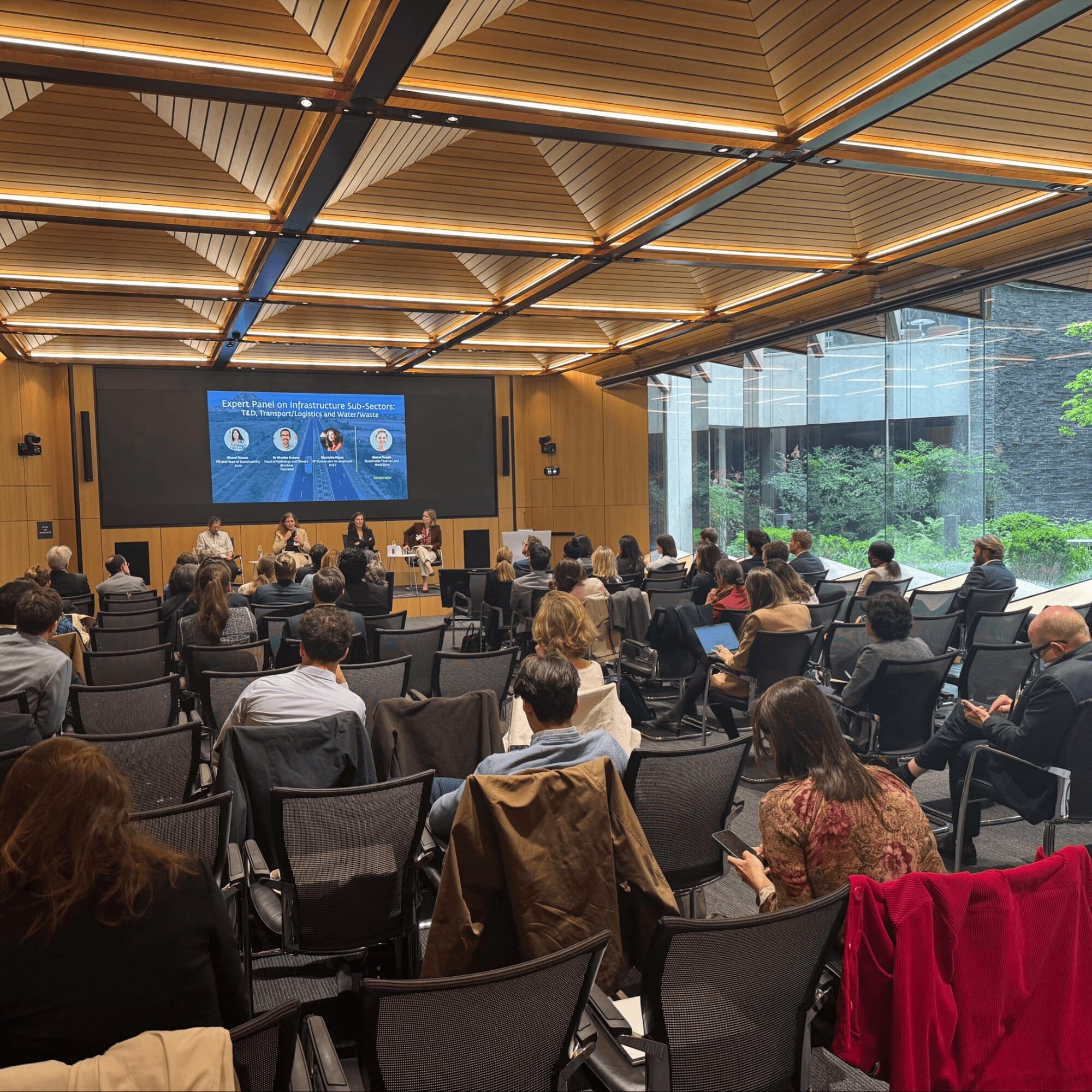
On 20 May 2026, the World Bank Group hosted a thematic session on Resilient Infrastructure, co-organised with AXA Climate, the FAST-Infra Group (FIG), and Global Infrastructure Basel (GIB) as secretariat for the FAST-Infra Label. The event brought together senior leaders from the public and private sectors.
One message was clear: resilience in infrastructure can no longer be ignored.
As shared by Stephane Hallegatte (Chief Climate Economist, World Bank), the damages and costs of climate hazards are significant in low and middle-income countries. The cost of delaying action by even one year will reach up to 100 billion dollars and will lead to infrastructure projects no longer being able to be insured.
The discussion showed that investing in resilience is sound, profitable, and urgent. That also means shifting how we think about infrastructure beyond the asset itself, to the systems it belongs to, the services it provides, and putting the users at heart.
One illustrative example also showed the differences between countries due to systemic vulnerability: a single road blocked by a flood event in Belgium may impact overall traffic by as little as 5%, compared to up to 75% in Madagascar. This stark difference comes down to redundancy and system preparedness; more resilient systems absorb shocks far more effectively.
The event launched the IFC–AXA Climate report ‘Low Cost, High Yield: The Adaptation and Resilience Investment Opportunity for Infrastructure’, which makes a compelling business case for investing in climate adaptation and resilience (A&R). The report finds that the cost of inaction on climate hazards is already large and rising, while targeted A&R upgrades to infrastructure, such as firebreaks and vegetation management, are cheap relative to the losses they prevent. An important finding: long-tenor financing dramatically improves A&R bankability; loan maturity matters more than interest rate reductions.
Central to this is that adaptation starts with better quantification: showcasing the cost of inaction, and the real payback after implementing the adaptation measures.
In the discussions it came forward that climate adaptation requires a shift in paradigm: climate adaptation is more than an investment question, it is also a risk question. Additionally, since climate exposure and vulnerability are context-specific, local knowledge is where adaptation has to begin.
The recent report “Underwriting the Future of Resilience” by Aon, the Global Infrastructure Facility, IFC - International Finance Corporation, and the Multilateral Investment Guarantee Agency, underlined the importance of involving insurers from the early stages on the project design.
Additionally, climate risk should be approached systematically, through standardised climate risk assessment, covering both current conditions and forward-looking scenarios. That means mapping exposure, identifying the right resilience measures, and ensuring those measures are built into every phase of a project, from siting and design through to construction and operations.
The report also highlights the need for new insurance products and features that explicitly recognise climate resilience, supported by a proactive and strategic approach to insurance and risk transfers.
As part of the panel "Insurability as a Critical Enabler for Scaling Private Investment", the FAST-Infra Label Insurability Working Group presented its latest results, highlighting that standardised resilience and insurability metrics have the potential to strengthen risk pricing and attract private investment.
As mentioned by Alexandre Chavarot (Climate Finance 2050) standards, such as the FAST-Infra Label can support by:
Finally, throughout all the interventions, Nature-based Solutions were mentioned as a cost-effective approach to managing climate risk while delivering tangible benefits for the communities surrounding these assets. Scaling them will require close collaboration between the public and private sectors, grounded in bottom-up assessments and risk-based analysis. Better documentation of nature-based solution examples in infrastructure is also needed to strengthen the evidence base and build confidence among investors and developers.
GIB continues to engage insurers and investors in making the case for sustainable and resilient infrastructure, including through the FAST-Infra Label as a tool for standardisation and risk transparency of infrastructure projects. GIB is also actively engaged in several European Horizon projects focused on implementing nature-based solutions on the ground, bringing together public and private sector actors to scale these approaches in practice.